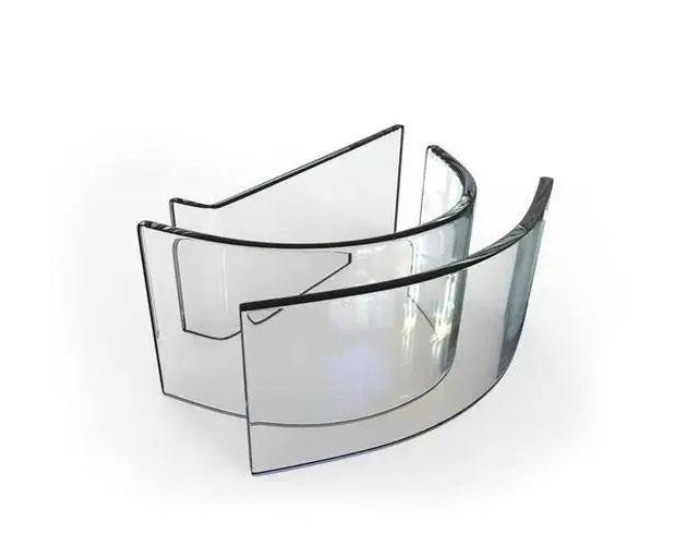
On the line, drying isn’t a background step—it’s the make-or-break moment that decides whether the next tempering or lamination run ships, or gets scrapped. Trapped moisture in coatings and along edges shows up later as pinholes, haze, and adhesion failures. Convection ovens lean on brute force to fight humidity, and you pay for it in kWh and maintenance hours. An infrared tunnel flips that approach: it delivers heat where it counts, when it counts, with a profile that matches the glass. We built the infrared tunnel around near-infrared (NIR) emitters that respond fast and keep the spectrum tight. The result is a drying zone that heats the film and the glass surface directly—instead of heating the plant air. The system lays down a uniform thermal field so stress doesn’t stack up across the sheet, which matters when you’re running thin low-e coatings and tight bending radii. Control stays repeatable: zoned power, closed-loop temperature, and belt speed matched to hold the profile steady shift after shift. In glass processing, the payoff shows up in three places. Energy drops because the tunnel heats the load, not the building, and idle power stays low when the line pauses. Yield climbs because controlled, uniform drying prevents micro-cracks, edge defects, and coating blisters that only show up later in inspection. Maintenance eases because the emitter layout is modular—swap what you need without tearing out the whole oven—and fewer temperature swings mean less thermal fatigue on components. Installation fits most lines, but you still have to pay attention to integration. Match emitter height and belt spacing to your typical glass thickness range, and make sure the power supply and cooling match the duty cycle. Expect a short commissioning run to dial in the profile for your specific coating and glass. Once it’s set, the process holds.
라인 상에서 건조는 단순한 배경 공정이 아니라, 다음 템퍼링 또는 라미네이션 공정이 출하되거나 폐기되는지를 결정하는 중요한 순간이다. 코팅과 가장자리 부분에 갇힌 수분은 이후에 핀홀, 흐림, 접착 불량으로 나타난다. 컨벡션 오븐은 습도 제거를 위해 강력한 열원을 사용하며, 이에 따른 전력(kWh)과 유지보수 시간이 소모된다. 적외선 터널은 이러한 방식을 전환하여, 유리와 일치하는 프로파일로 필요한 위치에, 필요한 시점에 직접 열을 전달한다.
적외선 터널은 빠르게 반응하며 스펙트럼이 좁은 근적외선(NIR) 방출기를 중심으로 설계되었다. 그 결과, 필름과 유리 표면을 직접 가열하는 건조 구역이 형성되며, 공장 내부 공기를 가열하지 않는다. 시스템은 균일한 열장을 형성하여 박막 저방사(low-e) 코팅과 좁은 굴곡 반경을 적용할 때 중요한 판 전체에 걸친 응력 집중을 방지한다. 제어는 반복 가능하여, 구역별 출력, 폐쇄 루프 온도 제어, 벨트 속도가 프로파일을 일정하게 유지하도록 조정된다.
유리 가공에서 효과는 세 가지 측면에서 나타난다. 첫째, 터널이 건조 대상만 가열하고 건물을 가열하지 않아 에너지 소비가 감소하며, 라인이 멈출 때 대기 전력도 낮게 유지된다. 둘째, 균일하고 제어된 건조가 미세 균열, 가장자리 결함, 코팅 블리스터 발생을 방지하여 수율이 향상된다. 셋째, 방출기 배열이 모듈식이어서 전체 오븐을 분해하지 않고 필요한 부분만 교체할 수 있으며, 온도 변화가 적어 부품의 열 피로가 감소하여 유지보수가 용이하다.
설치는 대부분의 라인에 적합하지만 통합 과정에 주의를 기울여야 한다. 방출기 높이와 벨트 간격을 일반적인 유리 두께 범위에 맞추고, 전원 공급 및 냉각 시스템이 작업 주기와 일치하는지 확인해야 한다. 특정 코팅과 유리에 맞는 프로파일 조정을 위해 짧은 시운전이 필요하며, 설정이 완료되면 공정이 안정적으로 유지된다.