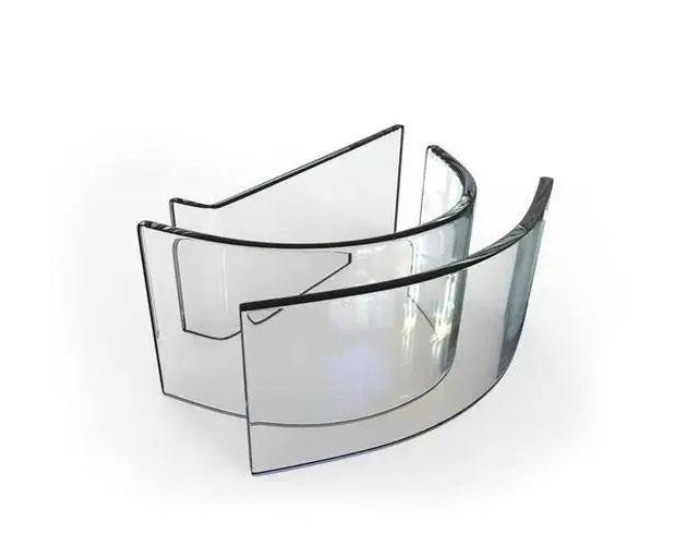
On the line, drying isn’t a background step—it’s the make-or-break moment that decides whether the next tempering or lamination run ships, or gets scrapped. Trapped moisture in coatings and along edges shows up later as pinholes, haze, and adhesion failures. Convection ovens lean on brute force to fight humidity, and you pay for it in kWh and maintenance hours. An infrared tunnel flips that approach: it delivers heat where it counts, when it counts, with a profile that matches the glass.
We built the infrared tunnel around near-infrared (NIR) emitters that respond fast and keep the spectrum tight. The result is a drying zone that heats the film and the glass surface directly—instead of heating the plant air. The system lays down a uniform thermal field so stress doesn’t stack up across the sheet, which matters when you’re running thin low-e coatings and tight bending radii. Control stays repeatable: zoned power, closed-loop temperature, and belt speed matched to hold the profile steady shift after shift. In glass processing, the payoff shows up in three places. Energy drops because the tunnel heats the load, not the building, and idle power stays low when the line pauses. Yield climbs because controlled, uniform drying prevents micro-cracks, edge defects, and coating blisters that only show up later in inspection. Maintenance eases because the emitter layout is modular—swap what you need without tearing out the whole oven—and fewer temperature swings mean less thermal fatigue on components. Installation fits most lines, but you still have to pay attention to integration. Match emitter height and belt spacing to your typical glass thickness range, and make sure the power supply and cooling match the duty cycle. Expect a short commissioning run to dial in the profile for your specific coating and glass. Once it’s set, the process holds.
Op de productielijn is drogen geen achtergrondproces, maar het cruciale moment dat bepaalt of de volgende hardings- of laminatierun wordt verzonden of afgekeurd. Vastgehouden vocht in coatings en langs de randen manifesteert zich later als pinholes, nevel en hechtingsfouten. Convectieovens gebruiken brute kracht om vocht te bestrijden, wat zich vertaalt in een hoog energieverbruik (kWh) en veel onderhoudsuren. Een infraroodtunnel keert deze aanpak om: hij levert warmte waar het telt, wanneer het telt, met een warmteprofiel dat aansluit op het glas.
We hebben de infraroodtunnel opgebouwd rondom near-infrared (NIR) emitters die snel reageren en het spectrum nauwkeurig houden. Het resultaat is een droogzone die de folie en het glasoppervlak direct verwarmt, in plaats van de lucht in de hal. Het systeem creëert een uniforme thermische veldverdeling zodat spanningen niet ophopen over het blad, wat van belang is bij dunne low-e coatings en strakke buigradiussen. De regeling blijft herhaalbaar: afgebakende vermogenszones, gesloten temperatuurregeling en een bandsnelheid die is afgestemd om het profiel shift na shift constant te houden.
In de glasverwerking vertaalt dit zich op drie terreinen. Het energieverbruik daalt omdat de tunnel de lading verwarmt en niet de hal, en het stilstandvermogen blijft laag wanneer de lijn pauzeert. De opbrengst stijgt omdat gecontroleerd en gelijkmatig drogen microbarsten, randdefecten en blaren in de coating voorkomt die anders pas bij inspectie zichtbaar worden. Het onderhoud wordt eenvoudiger door het modulaire ontwerp van de emitters: je vervangt alleen wat nodig is zonder de hele oven te demonteren, en minder temperatuurschommelingen verminderen thermische vermoeiing van componenten.
De installatie is geschikt voor de meeste lijnen, maar integratie verdient aandacht. Stem de hoogte van de emitters en de bandafstand af op het gebruikelijke glasdiktebereik, en zorg dat de voeding en koeling passen bij de bedrijfscyclus. Houd rekening met een korte inregelperiode om het warmteprofiel af te stemmen op de specifieke coating en het glas. Zodra dit is ingesteld, blijft het proces stabiel.