


On the line, the kiln isn’t some black box—it’s the last checkpoint before you either ship parts or scrap them. You push a batch, the temperature lags, and the top and bottom of the Glass heat at different rates. You can practically feel the thermal stress building. Then the phone rings: another warped part, another rework, another missed ship window. Glass kiln heating elements aren’t just about making heat. They have to deliver repeatable profiles under load, hold uniformity across the chamber, and keep cycle time predictable. When the heating system is inconsistent, bending and tempering pay for it immediately—through optical distortion, edge stress, and curvature that drifts from shift to shift.
What matters under the hood
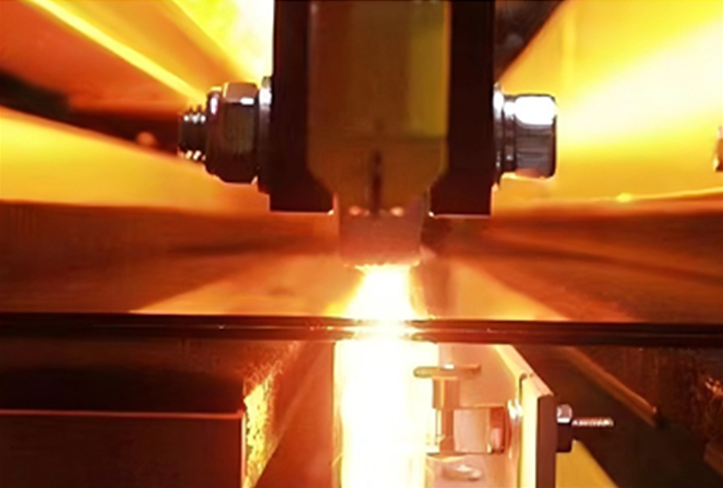
We design glass kiln heating elements for one reason: controlled, even heat where the glass needs it, when it needs it. The performance you can actually measure comes down to three numbers. Ramp rate.On a busy bending line, the kiln has to follow the process curve without overshoot. Our elements support ramp rates up to10°C/s, so you can jump from ambient to operating temperature fast and still hold a tight soak. Fast ramps cut idle time between changeovers, which keeps throughput moving. Temperature uniformity.Uneven heating is the quickest route to distortion and residual stress. We layout the elements and tune the watt density distribution to hit±2°C uniformityacross the active heating zone. Glass notices small gradients—especially at the edges—and that tight uniformity is what keeps shape repeatable, part after part. Power density.The element has to deliver enough heat to compensate for door openings, changing loads, and heat losses—without creating hot spots. We run at25–40 W/cm², depending on kiln design and glass thickness. That range is high enough for responsive recovery after loading, but controlled enough to avoid localized overheating that can damage fixtures and eat element life. The tech behind those numbers is straightforward: short-wave and medium-wave infrared elements, built with quartz and high-temperature alloy terminals, chosen for stable emissivity and predictable resistance across repeated thermal cycles. The geometry is tuned to the kiln’s reflector and airflow pattern, not guessed at.
Why this plays across the process
Glass processing is not a single-temperature world. Bending, tempering, annealing, and coating drying all demand different thermal behavior. Inbending, the kiln has to get the glass to forming temperature quickly, hold the profile, then release heat in a controlled way to set the shape. If the elements struggle to recover after the door opens, temperature dips and bend repeatability drifts. With fast recovery and tight uniformity, you cut scrap on complex curves and keep the press schedule honest. Intempering, the heating stage needs a consistent soak before quench. Temperature spread across the glass surface translates straight into non-uniform stress—optical defects and weak spots show up fast. Our elements are matched to the chamber so the soak is even, and the quench can do its job without fighting hot spots. Incoating and lamination support processes, the temperature window is narrow. Too much local heat can cause premature drying, pinholes, or adhesion problems. Controlled power density and uniformity protect coating integrity and keep lamination cure profiles repeatable. Energy use isn’t an afterthought. When elements are sized and placed correctly, the kiln hits setpoint faster and holds it with fewer control corrections. That reduces peak demand and stabilizes kWh per piece—something that matters when you run multiple shifts and pay real electricity rates.
The practical stuff you can’t skip
Glass kiln heating elements aren’t plug-and-play in every sense. You can get strong performance, but only if you plan for the realities of the floor. **Match the chamber.**Uniformity comes from element layout, reflector geometry, and airflow. If your kiln has hot and cold zones, swapping elements alone won’t fix the root issue. We size elements and specify positions based on the chamber itself, not a catalog average. **Watch the voltage and control method.**Many lines are designed around a specific control voltage. Our elements are available in multiple voltages, but the available voltage and control method—phase-angle, zero-cross, or transformer-based—has to match the existing cabinet. Retrofits are common, but they need a quick check of the power stage. **Protect terminals and insulation.**High temperature and repeated thermal cycling stress connections and ceramic insulators. Install with the right clearances, use matched hardware, and keep terminals clean. A little preventative attention here prevents headaches later. **Plan for element life.**Elements age in continuous operation and resistance drifts. Treat replacement as scheduled work, not reactive. Keep spares on hand for the sizes you run most, and rotate them to line up with preventive maintenance windows. If you want fewer scrap parts, tighter profiles, and less chasing temperature swings, make the heating system a known quantity. Specify elements that can ramp fast, hold even, and recover quickly—then run the process the way it was designed.