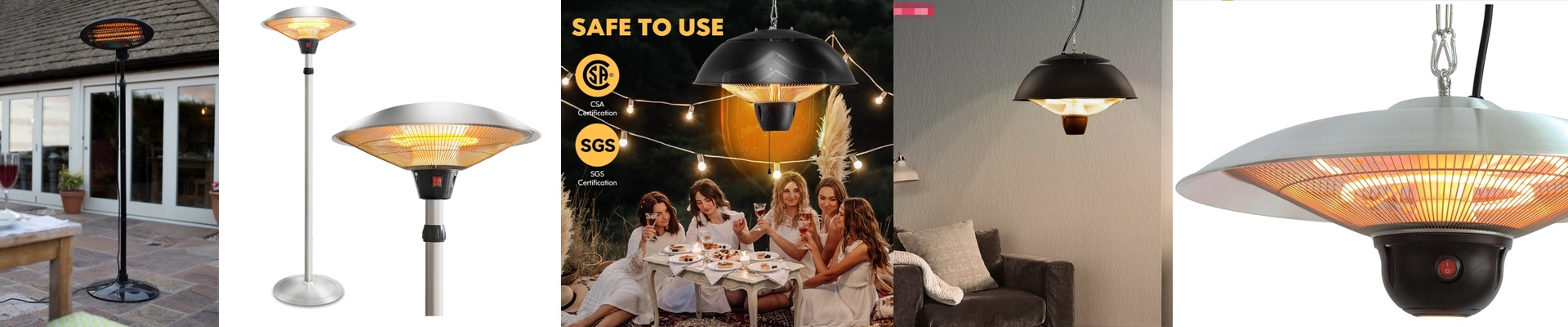




Why Most Patio Heaters Actually Fail (And How to Fix It)
If you’ve ever bought a budget electric patio heater, you probably know the drill. It works great for a season, then suddenly dies. Most of the time, the heating element is perfectly fine. The real culprit? The spot where the wires connect. When you’re building a waterproof infrared heater, that lead-wire seal is where everything wins or loses. I’ve seen way too many units where the sealant just shrinks or cracks after a few uses. Once that happens, moisture sneaks in, the wires fry, and you’ve got a fancy, expensive piece of scrap metal.
The heat problem
Infrared lamps get incredibly hot. That heat doesn’t just stay at the bulb; it travels right back down the wires. If you use some generic industrial glue, it can’t handle that cycle of heating up and cooling down. It gets brittle. It cracks. And the second it cracks, your “waterproof” rating is a joke. Water gets in, the metal oxidizes, and then—pop—you’ve got a short circuit. We handle this differently. We use a multi-stage potting compound that’s designed to breathe with the materials. It matches the way the quartz tube and copper wiring expand and contract. Instead of just plugging a hole, it actually bonds to them. They move as one piece.
Why the “cheap way” doesn’t work
A lot of assembly lines just dip the ends of the wires in some basic silicone and call it a day. That’s not going to cut it. Real sealing requires something called vacuum-degassing. Basically, we suck all the air bubbles out of the sealant. Why? Because air pockets create hotspots. Those hotspots eat away at the insulation from the inside out. Next time you’re looking at these heaters, check the seal’s footprint. You want it clean and flush. If it’s messy, water can actually “crawl” into the internal circuitry through capillary action.
One thing to watch out for
There is a trade-off. Because this seal is so solid, it makes the wire exit pretty rigid. You can’t just bend these wires at sharp angles during installation. If you do, you risk a stress fracture in the seal. Just give the cable a bit of slack. Don’t pull it tight. If you put too much tension on that potting compound, you’ll break the seal, and you’re right back to square one with a heater that isn’t waterproof anymore.