


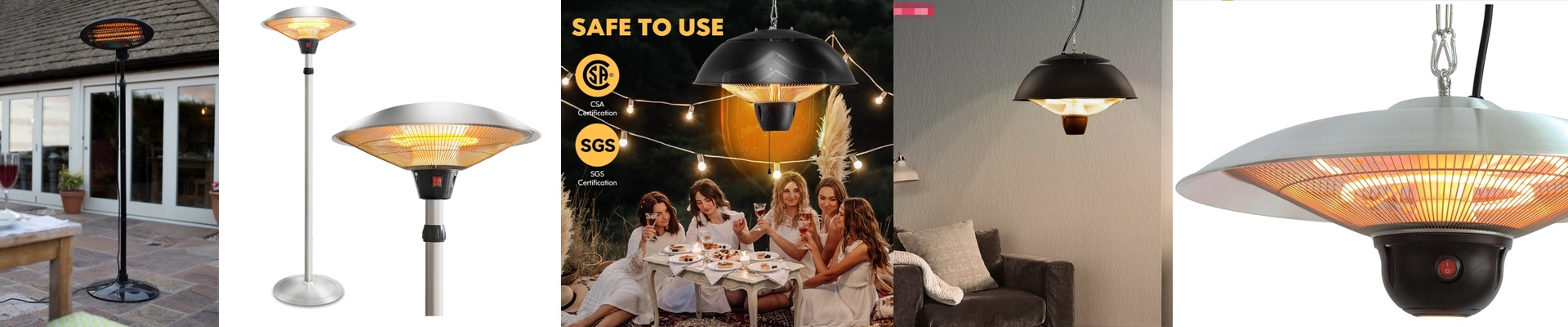

Keeping Your Bathroom IR Heaters Safe (And Your Users Alive)
Let’s be honest: bathrooms are a nightmare for electronics. You’ve got steam everywhere and the occasional direct splash. It’s a recipe for disaster if you’re not careful, because water and electricity just don’t get along. When we’re picking out infrared heating lamps for these spots, we stop worrying so much about how hot they get and start obsessing over how well they’re isolated.
The battle against moisture
Here’s the thing about water vapor—it loves to find a path. It creeps across surfaces and creates a bridge for electricity to go where it shouldn’t. That’s how you end up with short circuits or “tracking” right at the terminals. To stop this, we stick with sealed quartz envelopes and high-grade ceramic insulators. These materials don’t just “handle” humidity; they stay non-conductive even when the air is thick enough to drink. You want a setup where the live current is physically locked away from the outer shell. Period.
Where things usually go wrong
Most failures happen at the connection point. It’s the weakest link. If you use a basic open-socket design, the steam will eventually eat away at the contacts. It’s a slow crawl, but it happens. That’s why we use recessed terminals and gaskets that actually keep the water out. And a little pro tip: go with gold-plated or nickel-coated connectors. They fight off oxidation, which means your lamp won’t burn out early just because the connection got crusty.
The safety net
Now, let’s be real. No insulation is perfect forever. Think about the stress on a quartz tube. It goes from freezing cold to 600°C in a heartbeat. Over ten years, those rapid temperature swings can cause tiny micro-cracks. Because of that, you can’t just rely on the insulation. You have to bond the heater housing to a dedicated earth ground. If the internal seal ever gives up, you want that current to trip the GFCI or RCD immediately. You don’t want the outer casing becoming live while someone is standing in a puddle. We push these units until they’re in 95% humidity, making sure the leakage current stays under 0.5mA. But remember, the fanciest insulation in the world is useless if your grounding is sloppy. Wire it to its own circuit, check your IP rating, and you’re good to go.