


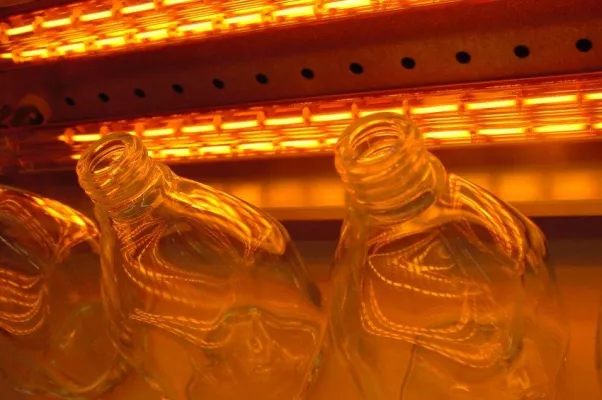
Cutting through ultra-thick glass is brutal on your equipment. If you’re trying to score that kind of material cold, your cutting wheels are basically taking a beating every single second. They chip fast. You end up replacing them way more often than you’d like. We found a better way to handle this using shortwave infrared (SWIR) lamps. Instead of fighting the glass, we target the cutting path specifically. Here is how it actually works. Most heat lamps are a waste of energy—they just warm up the air or the very top layer of the glass. But shortwave IR is different. It actually sinks deep into the material. By focusing that energy right where the score line will be, we can ease up the internal tension of the glass. It’s not about melting anything. It’s more about softening those molecular bonds just enough. When the wheel hits that pre-heated zone, it doesn’t struggle. It just glides. The result? A much cleaner break and wheels that actually last. Of course, you can’t just slap any bulb in there. To get enough heat to penetrate a thick slab, we use high-wattage lamps with quartz envelopes to handle the intense heat of the filaments. And you have to get the positioning right. The lamps need to be tucked in tight against the cutting head to keep the beam narrow and concentrated. If they’re too far away, you lose the magic. But there’s a catch. These lamps put out a lot of heat. If your conveyor or table isn’t built for it, you might end up warping your frame or frying your sensors. You have to find that sweet spot between the lamp’s power and what your cooling system can handle. Plus, you have to be careful with the speed. If you push too much heat too fast, you risk thermal shock—which means the glass could crack before the wheel even touches it. Just keep your feed rate in sync with how the lamp warms up, and you’re good to go.