

Fixing Those Pesky Cold Spots in Glass Annealing
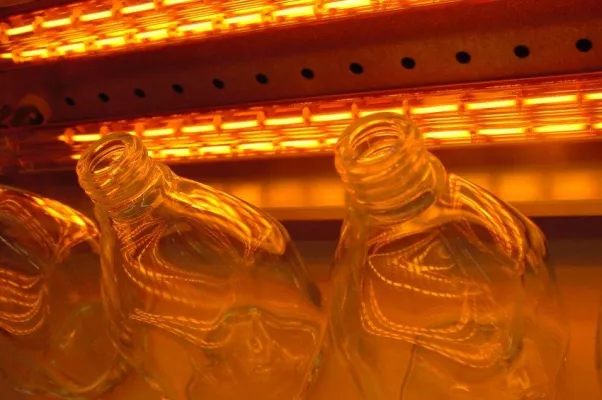
Ever have a piece of glassware with a weird neck or a flared rim that just refuses to heat evenly? It’s a nightmare. You get these “dead zones” where the hot air just doesn’t reach. Then, as the glass cools, those cold spots create internal stress, and—snap—your hard work ends up as a pile of shards. The fix isn’t more hot air. It’s short-wave infrared (IR) heating. Getting the heat where it actually needs to go Here’s the thing about IR lamps: they don’t waste time heating up the air around the glass. They beam energy straight into the surface. To handle a complex shape, we set up an array of quartz halogen tubes at different angles. It’s all about the footprint. By picking the right wattage and length, you can force heat into those deep, recessed corners that air currents usually ignore. Because we’re using short-wave radiation, the heat actually sinks into the thickest parts of the glass without melting the thinner walls. It’s a much more balanced way to hit that annealing point. The nuts and bolts On the hardware side, we usually go with high-density quartz tubes. We use R7s or SK15 connectors because, let’s be honest, lamps burn out. You want to be able to pop a new one in without tearing the whole machine apart. The coating on the tube matters too. If you need to ramp up the temperature fast, clear quartz is your best bet—it’s raw and intense. If you need something a bit more surgical, there are coatings that shift the wavelength to better match how your specific glass absorbs heat. A few warnings from the trenches High-wattage IR arrays pack a serious punch. But that power comes with a catch: your control system has to be snappy. If your PID controller is sluggish, you’ll overshoot the temp, cause some thermal shock, and you’re right back to square one with cracked glass. And watch your spacing. If you cram too many lamps into a tiny oven, the chassis starts to soak up all that heat. Your cooling fans will be screaming just to keep your electronics from frying. One last tip? Use high-temperature silicone leads for your wiring. Standard insulation will melt the second it gets near the tube ends, and nobody wants a meltdown in the middle of a production run.